Materials
Pairing stone and timber: value, hue and three combinations
Most failed material pairings get blamed on warmth. A client says the oak reads orange next to the grey stone, and the assumption follows that a warm material and a cool material cannot share a room. The fault is almost always value, not hue.
Value means lightness alone, measured here as light reflectance value on a 0 to 100 scale. The five references above are #E8E4DB honed limestone at LRV 78, #BFB6A6 travertine at LRV 47, #8A6A45 mid oak at LRV 16, #5C4327 walnut at LRV 6 and #3A3A38 basalt at LRV 4. Limestone and oak sit 62 points apart in lightness. Walnut and basalt sit 2 points apart despite belonging to opposite hue families.
| Material | Hex | LRV | Hue family | LRV drop once sealed |
|---|---|---|---|---|
| Honed limestone | #E8E4DB | 78 | cool, faint green grey | 8 to 12 |
| Filled travertine | #BFB6A6 | 47 | warm, yellow grey | 6 to 10 |
| Mid oak | #8A6A45 | 16 | warm, orange brown | 2 to 4 |
| Walnut | #5C4327 | 6 | warm brown, violet grain | 1 to 3 |
| Honed basalt | #3A3A38 | 4 | cool near black | 4 to 8 |
Sealed figures in the table are ranges observed on physical offcuts rather than manufacturer data, and each stone behaves differently by quarry. Take a reading on the actual offcut with the actual sealer before treating a value gap as fixed.
Principle
How many LRV points of value contrast does a stone and timber pairing need?
Two materials in the same hue family need a value gap of at least 25 LRV points to read as a deliberate pair. Limestone #E8E4DB at LRV 78 with oak #8A6A45 at LRV 16 gives 62 points. Below 15 points, hue and texture carry the whole pairing and finish decides the outcome.
| Pairing | LRV gap | Hue relationship | Condition for success |
|---|---|---|---|
| #E8E4DB with #5C4327 | 72 | cool stone, warm timber | none; the gap carries the pairing on its own |
| #E8E4DB with #8A6A45 | 62 | cool stone, warm timber | none; wall colour stays near LRV 80 |
| #BFB6A6 with #8A6A45 | 31 | both warm | one cool element and 3000K lamps |
| #3A3A38 with #8A6A45 | 12 | cool stone, warm timber | matt against open grain, plus a pale third surface |
| #5C4327 with #3A3A38 | 2 | warm timber, cool stone | directional light; merges into one plane under 100 lux |
Photograph any interior in greyscale and the structure of the scheme appears in one frame. Two surfaces that sat quietly together in colour either separate cleanly in grey or merge into a single mass, and a merged mass is what clients describe as muddy.
Travertine at LRV 47 with oak at LRV 16 gives 31 points, above the 25 point minimum but quieter than the limestone pairings. Walnut at LRV 6 against basalt at LRV 4 gives a 2 point gap, so the pairing survives only because walnut is a warm brown with visible grain and basalt is a cool near black with a matt, slightly open face. Under low light the two surfaces become one dark plane, which is the intended effect in a boot room and a mistake in a kitchen.
Warm against cool is not the problem clients believe. Warm timber against cool stone works whenever the value gap exceeds 25 points, because the eye registers the lightness difference first and the temperature difference second.
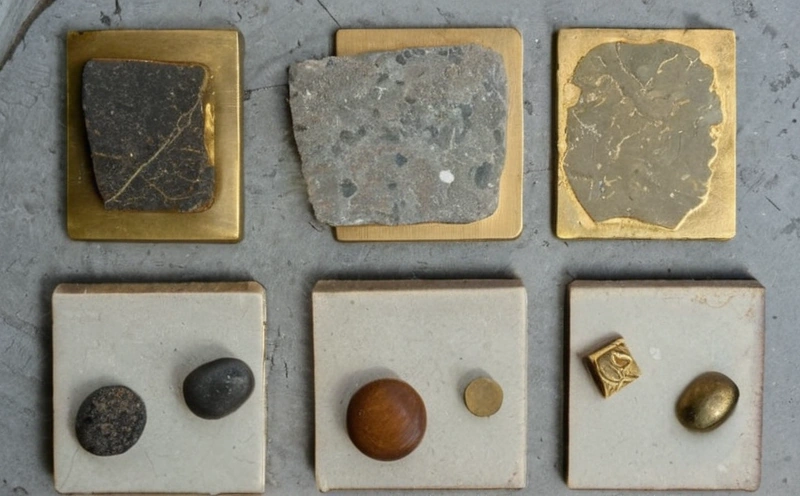
Combination one
Does honed limestone at LRV 78 work with walnut at LRV 6?
Limestone #E8E4DB at LRV 78 with walnut #5C4327 at LRV 6 gives a 72 point value gap, nearly three times the 25 point minimum. Limestone takes the large plane, floor or worktop, and walnut takes joinery covering roughly 25 percent of the visible surface area. The trap is green cast against violet grain.
Honed limestone frequently carries a faint green grey cast, and walnut carries violet in the darker grain. Green and violet sit close to opposite each other on the colour wheel, so the two casts exaggerate one another and a pairing that read neutral in the showroom reads lurid on site. Sample the actual slab against the actual veneer under the room lighting, because catalogue photography corrects both casts out.
Wall colour for the limestone and walnut pairing wants to stay near the stone at LRV 80 in a warm off white. A brilliant white at LRV 90 or above sits 12 points clear of the limestone and leaves the stone reading dirty by comparison.
Combination two
Does travertine at LRV 47 work with mid oak at LRV 16?
Travertine #BFB6A6 at LRV 47 with mid oak #8A6A45 at LRV 16 gives a 31 point gap between two warm materials, the quietest pairing of the three. The scheme reads calm in daylight at 5500K and flat under 2700K lamps, because warm bulbs push both surfaces towards the same amber.
Lamp temperature fixes the flatness for the cost of a bulb. Lamps at 2700K collapse the distinction between travertine and oak, while 3000K holds enough separation for the travertine to keep reading as stone and the oak to keep reading as timber.
One cool element stops the scheme drifting into sepia. The muted green #7C8C7F at LRV 25 on a single joinery run, or blackened steel near #2C2C2A at LRV 3 on a frame, gives the eye a fixed reference point and makes both warm materials read warmer by comparison.
Combination three
Can basalt at LRV 4 sit beside oak at LRV 16?
Basalt #3A3A38 at LRV 4 with oak #8A6A45 at LRV 16 gives a 12 point gap, breaking the 25 point minimum on purpose. Texture carries the pairing: a matt close grained black stone against an open grained warm timber. Honed basalt beside brushed oak holds; polished basalt beside lacquered oak fails.
Finish decides the outcome because both surfaces sit inside the same narrow value band. Honed basalt scatters light and brushed oak breaks it across the grain, so the boundary between the two stays visible from across a room. Polished basalt and lacquered oak return the same specular highlight at the same angle, and the boundary disappears at every viewing position that catches the reflection.
A pale third surface balances the pairing. Limestone at LRV 78 or plaster near LRV 75 above the two dark materials restores a value range of roughly 74 points across the room and stops a kitchen island reading as a single black mass.
Checks
Which three tests should run before ordering stone and timber?
Three tests catch a failed pairing before purchase: a greyscale photograph of the samples together, a vertical viewing as well as a flat viewing, and a wetting test on the stone. A worktop reads 5 to 8 LRV points lighter than a splashback in the same stone, and sealing closes gaps by up to 10 points.
Test one photographs the samples together and converts the file to greyscale. Any two surfaces that merge in the greyscale image will merge on site, and no amount of hue difference recovers a merged pair.
Test two views every sample vertically as well as flat. A horizontal worktop collects sky light at 7500K across its whole area, so the identical stone reads 5 to 8 LRV points lighter on a counter than on a vertical splashback 400 mm above it.
Test three wets the stone offcut to simulate sealing. Honed limestone and filled travertine both darken once sealed, limestone by 8 to 12 LRV points and travertine by 6 to 10, which closes a planned value gap without any warning at specification stage.