Light
North facing rooms: how orientation changes a paint colour
Orientation moves a paint colour further than the paint does. A north facing room in the northern hemisphere receives no direct sun on any day of the year, so the wall is lit by blue sky at roughly 7000K to 8000K for the whole day, and every colour on that wall shifts towards grey.
The five swatches above are one green grey family sampled at five strengths. #DDE1DC sits at LRV 74, #C3CBC6 at LRV 58, #A7B2AE at LRV 43, #7E8B8A at LRV 25 and #5B6668 at LRV 13. In a south facing room the two palest members read as colour. In a north facing room #DDE1DC and #C3CBC6 read as primer.
Orientation
What colour temperature does each orientation deliver through the day?
A north facing wall in the northern hemisphere receives only diffuse sky light, holding 7000K to 8000K from 09:00 to 16:00 with no direct sun at any hour. A south facing wall takes direct sun at 5000K to 5500K, and a west facing wall drops to 2800K after 19:00 in midsummer.
| Aspect | 08:00 | 12:00 | 16:00 | 19:00, midsummer |
|---|---|---|---|---|
| North | 7500K | 7500K | 7500K | 7000K |
| South | 5500K | 5200K | 5000K | 3500K |
| East | 3000K | 6500K | 7000K | 7000K |
| West | 7000K | 6500K | 4000K | 2800K |
Figures in the table are typical clear day values for a latitude near 51 N in the northern hemisphere, and each figure moves by several hundred Kelvin with cloud cover. Full overcast pulls every aspect towards 6500K, which is why an overcast day makes a south facing room look briefly like a north facing one.
The steadiness of north light is the useful part. A north facing wall reads the same at breakfast and at four in the afternoon, so a paint that works there at 09:00 works there all day, and no colour needs checking against a moving patch of sun.
South light behaves in the opposite way. Direct sun crossing the room between mid morning and mid afternoon lifts apparent lightness by an amount most observers read as 10 to 15 LRV points, bleaching pale colours flat. Strong pigment loads survive south light; delicate tints disappear into the glare.
East facing rooms take warm low sun at 3000K until about 11:00, then fall back to the same cool sky light a north facing room receives for the rest of the day. West facing rooms run cool and dull through the morning, then take an orange wash from about 16:00 in December and about 19:00 in midsummer. A west facing wall in a pink beige reads cream at noon and salmon at sunset.
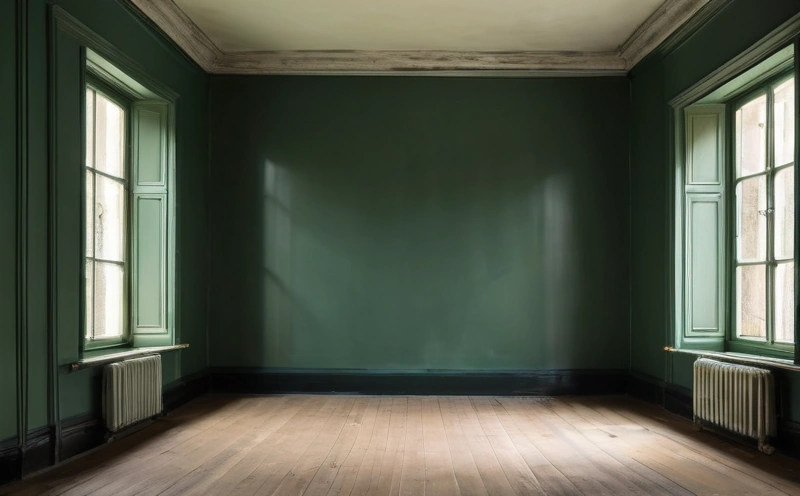
Failures
Which paint colours collapse in north light, and at what LRV?
Cool greys above LRV 65 fail on a north facing wall, because 7500K sky light adds blue to an already blue undertone and the surface returns bare concrete. #DDE1DC at LRV 74 survives only because green in the mix counters the sky. Pale yellows above LRV 70 turn sour green.
| Wall LRV | Undertone | Reading under 7500K sky light | Verdict |
|---|---|---|---|
| 90 and above | any | shadows read blue, every scuff reads grey | fails |
| 65 to 89 | blue or violet | bare concrete, no depth at any hour | fails |
| 65 to 89 | yellow oxide | holds warmth, reads as a chosen colour | works |
| 45 to 64 | low pigment load | greys out by 13:00 on the far wall | marginal |
| 25 to 44 | green, clay pink or olive | keeps hue identity through the day | works |
| Under 20 | any saturated | soft source flatters the dark plane | gains |
The threshold to remember is LRV 65. Above LRV 65 a cool grey on a north facing wall returns raw concrete, and below LRV 45 the same hue family keeps its identity from 09:00 to dusk. Lilac and pale violet fail hardest: the red half of the mix drops out under 7500K light and the wall reads mouse grey by mid afternoon.
The four colours above hold in north light for two separate reasons. The warm off white #F4F0E4 at LRV 87 holds because yellow oxide pushes back against the sky. The muted green #7C8C7F at LRV 25, the grey green #7E8B8A at LRV 25 and the deep #5B6668 at LRV 13 hold because pigment load resists the wash.
Fighting a dark room with the palest available paint backfires as a rule rather than as an exception. A cool wall at LRV 80 in weak light returns a dull surface with no depth, while a saturated colour between LRV 15 and LRV 25 reads as a deliberate choice and lets 2700K lamps do the lifting after dark.
Daylight
How much daylight does a north facing room actually receive?
Daylight factor states indoor illuminance as a percentage of unobstructed outdoor illuminance under a full overcast sky. A habitable room needs a daylight factor of 2 percent, a bedroom 1 percent, and a well daylit room 5 percent. Outdoor overcast illuminance runs 1000 to 10000 lux, so 2 percent delivers 20 to 200 lux.
A north facing room at the 2 percent minimum receives no direct sun to lift the figure at any hour, so 20 to 200 lux is the working range all day rather than a morning low point. A south facing room at the same 2 percent daylight factor exceeds the range for several hours whenever direct sun crosses the glass.
Low illuminance is what makes LRV decisive in a north facing room. Reflected light scales with LRV, so a wall at LRV 74 returns roughly three times the light of a wall at LRV 25, and the pale wall still reads flat because 7500K sky light carries no warm component for the surface to return.
Sampling
Which sampling schedule predicts how a paint reads in a north facing room?
Two coats of each candidate paint go onto A2 primed card, 42.0 cm by 59.4 cm, with a 40 mm unpainted margin on all four sides. Each board recoats at 4 hours, cures 24 hours, and then gets read at four fixed positions across one clear day and one overcast day.
Sample boards beat patches painted straight onto the wall for two reasons. The existing wall colour bleeds into the judgement by simultaneous contrast, and a painted patch cannot move to the darkest corner of the room.
Run the same four positions on both days:
- 09:00, board flat against the wall containing the window.
- 13:00, board against the wall opposite the window, the darkest vertical plane in the room.
- 16:00, board flat on the floor, then repeated at eye height near 1.6 m.
- After dark, under the lamps the room will actually use, usually 2700K.
Photograph every position with the phone camera locked to a fixed exposure and a fixed white balance. Automatic white balance corrects the exact colour temperature shift the test exists to record, so an auto exposure sequence produces four photographs that all show the same neutral wall.
Convert the locked photographs to greyscale afterwards. Greyscale strips hue out of the comparison and leaves lightness, which is the variable that decides whether a north facing wall reads as concrete or as colour.
Two rooms in one house rarely accept the same paint. A green grey chosen for a north facing sitting room reads overworked in the south facing bedroom above, and matching the two by eye across a stairwell is guesswork. Sample every room separately, including rooms taking the identical paint.